

Achilles tendon
The push-off that makes walking fast, running and climbing feel natural can become guarded or unreliable.

Tendon repair · World-first Professor Lee technique
NANO ATi is Professor Paul Lee’s tissue-specific tendon repair technique. It builds Seed · Soil · Signal around the exact tendon problem—then delivers them as one precise procedure.
Clinical plate 01 · Tendon load path
Healthy tendon fibres organise force in one direction. Degeneration or a partial tear interrupts that pattern, but biology only helps when diagnosis and progressive loading are planned together.

Mechanical question
Define the tendon zone, tissue quality and load that repeatedly provokes it.
Regenerative opportunity
Support a tissue-specific repair environment, then teach the tendon to carry load again.
The NANO ATi pathway
The process starts with the tendon diagnosis and its loading problem. Seed, soil and signal are supporting biological roles inside that larger plan—not substitutes for accurate targeting or progressive rehabilitation.

Stage 01
Confirm the pain generator
Examination and imaging distinguish tendinopathy or a partial tear from referred pain, joint disease, nerve irritation or a rupture needing conventional repair.
Stage 02
Autologous tissue source
Tendon-focused autologous micrografts prepared through Mytocel AMT provide the cellular starting material.
Stage 03
Build the local environment
ChondroFiller collagen supplies the local soil intended to support and retain the biological preparation.
Stage 04
Supply the biological instruction
ArthroZheal platelet-rich fibrin supplies the patient-derived biological signal.
Stage 05
Deliver, protect and progressively reload
The planned combination is delivered to the defined tendon zone under image guidance, followed by staged mechanical rehabilitation.
Stage 06
Let tendon biology meet the mechanical plan
The delivery is one stage of tendon repair. The staged return of load is how the treated tissue is asked to become useful again.
The biological integration
The organising logic stays constant. The clinical meaning changes with the source tissue, target anatomy and mechanics of repair.

Tendon-focused autologous micrografts prepared through Mytocel AMT provide the cellular starting material.
ChondroFiller collagen supplies the local soil intended to support and retain the biological preparation.
ArthroZheal platelet-rich fibrin supplies the patient-derived biological signal.
Same method · different target
The problem NANO ATi is designed around
Tendons transmit force from muscle to bone. They are meant to tolerate thousands of repeated loads, but their blood supply is limited and their repair response can fall behind. The result is not simply inflammation: the collagen can become disorganised, the tendon thickens or tears, and ordinary load keeps restarting the same problem.
A pain-killing injection may quieten a symptom without changing that biology. A biological treatment may still fail if the wrong structure is targeted or loading is not corrected. Professor Lee designed NANO ATi to treat the tendon as both a living tissue and a mechanical cable.
The push-off that makes walking fast, running and climbing feel natural can become guarded or unreliable.
Jumping, landing, stairs and rising from a chair repeatedly load the tendon at the front of the knee.
A tendon problem in the shoulder can take away sleep, strength and confident overhead movement.
Tennis elbow can make ordinary gripping—lifting a kettle, opening a door, using tools—unexpectedly painful.
A useful way to picture it
Healthy collagen transfers force in an organised direction.
Microdamage accumulates faster than the tissue can remodel.
The tendon may remain painful, weak or vulnerable to further tearing.
Professor Lee’s design response
NANO ATi does not treat “tendon pain” as a generic destination for a needle. The structure is identified, the damaged zone is mapped, the biological roles are prepared, and delivery is integrated with the mechanical rehabilitation that follows.
The exact tendon and pathological zone.
Autologous tissue micrografts prepared through Mytocel AMT.
ChondroFiller collagen provides the local environment and retention.
ArthroZheal platelet-rich fibrin prepared from the patient’s blood.

Function is the destination
The goal is not simply to place biology into tissue. It is to restore a tendon’s capacity to transfer force through the movements that matter, using a rehabilitation plan that progressively tests and rebuilds that capacity.
Where it may fit
NANO ATi may be discussed when the tendon diagnosis is clear, symptoms remain meaningful, rehabilitation has not restored function and the structure can realistically be approached through a biological, image-guided technique.
Discuss a tendon problemNot a shortcut
Some tendon problems need only time and intelligent loading. Others need surgical reattachment or reconstruction. A new technique is useful only when it is a better answer for the exact tissue problem—not simply because it is new.
Evidence boundary
Mytocel AMT, collagen scaffolds and platelet-rich fibrin each have relevant component evidence. NANO ATi is Professor Lee’s complete tendon-specific protocol. Evidence for one part is not presented as proof of the combined technique, and suitability remains an individual clinical decision.
Tendon repair depends on diagnosis, biology and load—so the answers are more useful than a treatment label alone.

Compare the tissue-specific techniques for cartilage, tendon and meniscus.
Read more
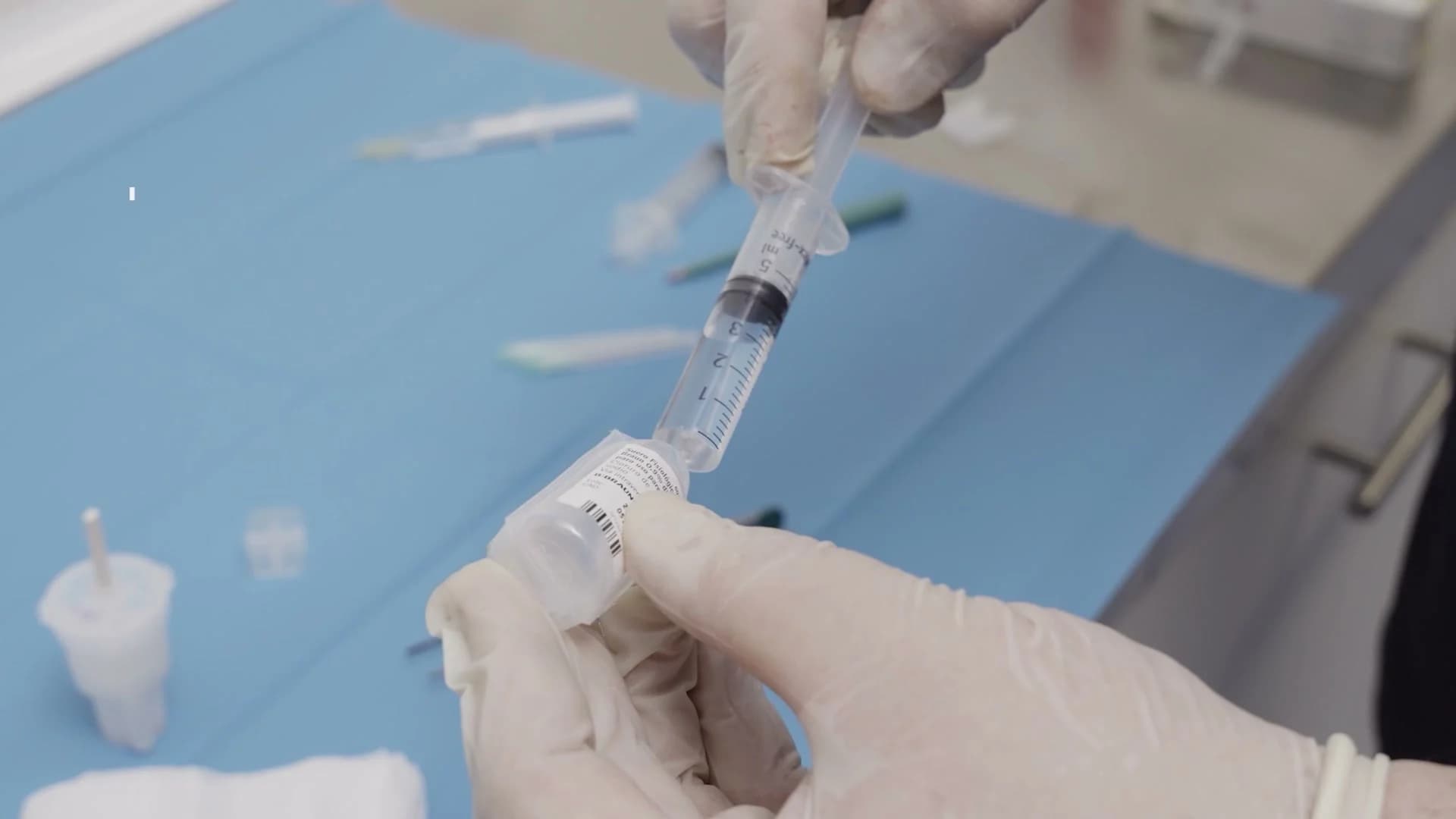
Understand how autologous tissue is mechanically prepared into the cellular micrograft solution.
Read more

See how the same biological design principle changes when the target is the knee’s load-sharing meniscus.
Read more
Diagnosis and load planning come before biology
Professor Lee assesses whether NANO ATi, structured rehabilitation or established tendon surgery offers the strongest route back to function.